

Restorative Conversations: Teaching children to manage conflict restoratively through an Aardman animation
Upper Key Stage Two: Year 5 or 6
RHE Link:
Pupils should know
- 1. How important friendships are in making us feel happy and secure, and how people choose and make friends.
- 2. That healthy friendships are positive and welcoming towards others, and do not make others feel lonely or excluded. Pupils should learn skills for developing caring, kind friendships.
- 4. The characteristics of friendships that lead to happiness and security, including mutual respect, honesty, trustworthiness, loyalty, kindness, generosity, trust, sharing interests and experiences, and support with problems and difficulties.
- 5. That most friendships have ups and downs, and that these can often be worked through so that the friendship is repaired or even strengthened.
- 6. How to manage conflict, and that resorting to violence is never right.
- 7. How to recognise when a friendship is making them feel unhappy or uncomfortable, and how to get support when needed.
Respectful, kind relationships
Pupils should know
- 1. How to pay attention to the needs and preferences of others, including in families and friendships. Pupils should be encouraged to discuss how we balance the needs and wishes of different people in relationships and why this can be complicated.
- 2. The importance of setting and respecting healthy boundaries in relationships with friends, family, peers and adults.
- 3. How to communicate effectively and manage conflict with kindness and respect; how to be assertive and express needs and boundaries; how to manage feelings, including disappointment and frustration.
- 4. Pupils should have opportunities to discuss the difference between being assertive and being controlling, and conversely the difference between being kind to other people and neglecting your own needs.
- 6. Practical steps they can take and skills they can develop in a range of different contexts to improve or support their relationships.
- 7. The conventions of courtesy and manners.
- 11. How to seek help when needed, including when they are concerned about violence, harm, or when they are unsure who to trust.
Pupils should know
- 1. What sorts of boundaries are appropriate in friendships with peers and others (including online). This can include learning about boundaries in play and in negotiations about space, toys, books, resources etc.
Pupils should know
- 4. How to recognise feelings and use varied vocabulary to talk about their own and others’ feelings.
Download Lesson Plan, Lesson Guidance and Resources:
GHLL RSHE Lesson Plan KS2 Restorative Conversations
Restorative Conversations: Lesson Guidance
Resource Sheet A: Understanding of Relationships
Resource Sheet B: My Relationships
Content on this page is available for any schools to use with kind permission of the Gloucestershire Healthy Living and Learning Team and the Office of the Police and Crime Commissioner (OPCC) and cannot be used for commercial gain.
The lesson plan, lesson guidance and resources can be downloaded from the links in the blue box
Lesson Objectives
To know there are many different types of relationships
To know that all relationships, including healthy ones, have ups and downs
To understand how to manage conflict in relationships
To know how to hold a restorative conversation
Learning Outcomes
I can talk about the relationships that are important to me
I can explain what a healthy relationship looks like
I know a restorative conversation consists of saying, sharing and asking
I can hold a restorative conversation
Begin the session by reminding the children of the ground rules for PSHE lessons; these may be recorded in their PSHE books or on display in the classroom. (An example of ground rules can be found in the accompanying Lesson Guidance).
Baseline Assessment Activity (5 mins):
Ask the children to record on the assessment sheet (Resource Sheet A), or in their PSHE books, what they understand by the word ‘relationship’. They can write down (and illustrate) any ideas/words to do with their understanding of the term, including how relationships can be ‘looked after’.
What is a Relationship?
Feed ideas back in pair/small group discussion or as a whole class discussion.
Points to reflect on are:
- relationships are about connections
- relationships can take many forms (friends, parents, carers, brothers, sisters, classmates, teachers, neighbours, etc)
- relationships fulfil different needs
- healthy relationships are ones where we feel respected and valued, listened to and safe.
Relationship Circles
Ask each child to complete their own ‘Relationships Circle’ (Resource Sheet B). With themselves at the centre, the children can write the names of (or draw) the people in their lives with whom they have a relationship. They may choose to put the people who have a closer relationship with them in the concentric circle closer to them (Me) in the middle.
Looking at their relationships circle in small groups, ask the children to identify three different types of relationship and explain to each other how they are different.
The class teacher can ask the question: What makes a relationship healthy?
What is Conflict?
Put the word ‘conflict’ on the board and ask the children to place themselves on a continuum in response to the question:
Does a healthy relationship ever have conflict? (define the word conflict if necessary)
Invite children to give their reasons as to why they chose to stand where they have.
Ask the children to reflect on the following question:
Do you always get along with your classmates/sibling/friend?
Once back in their seats, share the following scenario illustrating a conflict of opinion, where one friend/sibling switches off a console:
You’re playing a game on a console with your older brother/sister/friend, etc. They are so good at this game but today you are actually beating them. You can’t believe it; you’re having so much! Suddenly, your brother/sister/friend jumps up, says they are bored and want to go and play outside, and then flicks the console off!
Give the children one minute to tell the person next to them what they think might happen next. Collect some responses. If appropriate, the ‘Flipping the lid’ analogy in terms of brain function can be shared with the children at this point.
Talk to the children about how ups and downs are normal in all relationships. We all have these moments, and we get past them IF we manage them in the right way.
How Can We Restore These Relationships?
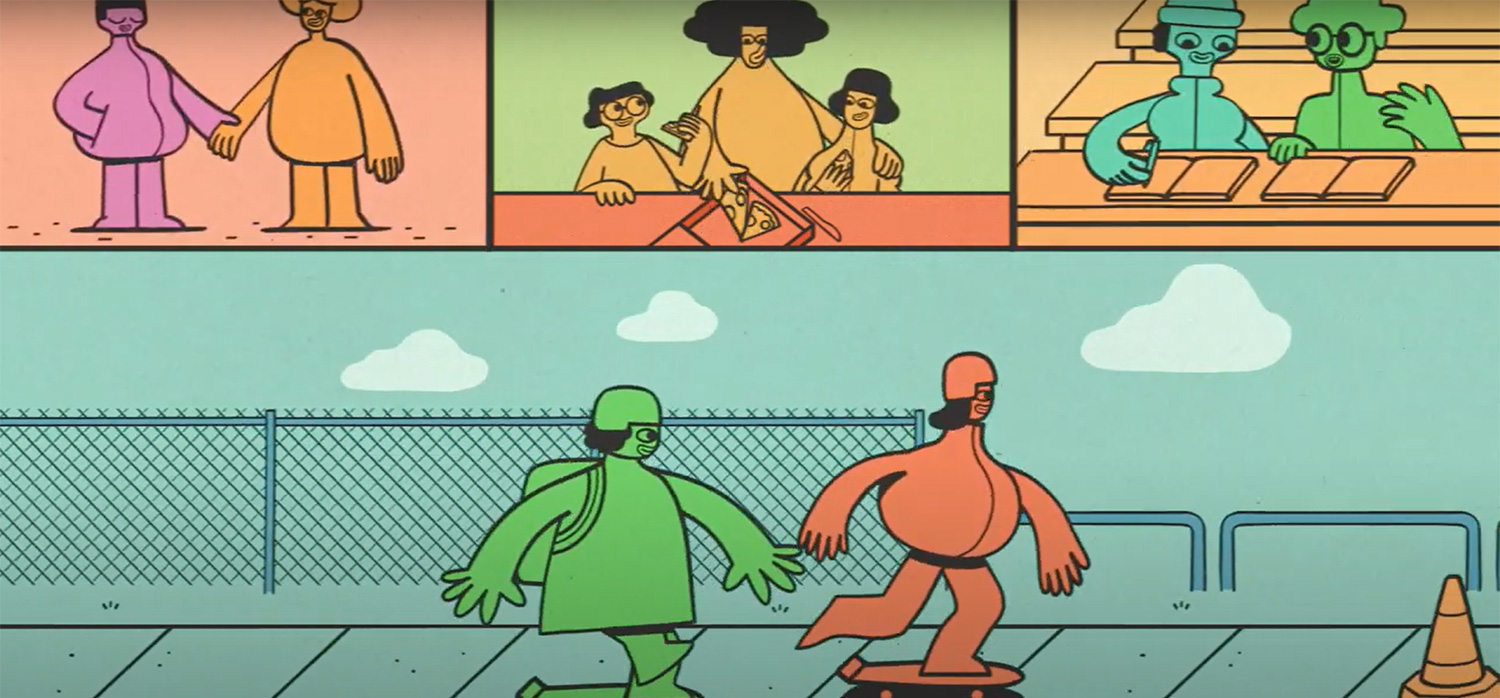
Share the Aardman animation ‘Restorative Conversations’
Elicit from the children the key structure of a restorative conversation: Say, Share, Ask
There are three stages to a restorative conversation:
- Say: describe what happened (*neutral language)
- Share: explain how it made you feel
- Ask: talk about what would make things better (request not demand)
*avoid using ‘you’ if possible; use ‘I’ instead, e.g., “When I was left out of the game…” rather than “When you left me out of the game…”
(Resource Sheet C can be displayed in the classroom)
Think about the console scenario shared earlier. What could the friends say to each other in a restorative conversation? (Elicit responses from the class)
Person 1: When my game was turned off in the middle of me playing it, I felt angry and upset. Could you tell me next time if you want to stop what we are doing?
Person 2: I was bored and wanted to change the game and play outside.
Person 1: Shall we agree that next time we ask each other before anyone turns the game off? Acknowledge that the people involved will likely need time and space to calm down before they are ready to discuss the conflict.
Why Is It Important to Restore Relationships?
Thinking back to the relationships we have in life (Resource Sheet B), can children consider why it is important these relationships are looked after? Maintaining and nurturing healthy relationships is a skill, and being able to do this in life will improve our wellbeing and result in happier, fulfilled lives.
Key to maintaining healthy relationships is being able to work through conflict restoratively. Working in groups of three or four, the children will be given a scenario which they will be asked to role-play (Resource Sheet D). With two key characters in each scenario, the third (and possibly
fourth) child may choose to be another person in the scene, such as a teacher or parent, or they may be the ‘director’. The children can act out their scenarios, following the key features of a restorative conversation:
Say what happened
Share how it made you feel
Ask what you would like to be different
Remind the children about swapping ‘you’ for ‘I’ – talking about how ‘I felt’ rather than what ‘You did’.
Scenarios:
- Kareem is reading a book when his brother walks past him and knocks it out of his hands. The book falls to the floor and he loses his place.
- Claire keeps calling Nicole a cry-baby and teases her about the clothes she wears.
- Max and Carlos had a big argument before the summer holidays, because Max wouldn’t let Carlos join in with the football game at the park. They have moved on to secondary school and have been put in the same class.
- George keeps using Phoebe’s new pen without asking and leaving the lid off it.
- Lucas never listens to Alex’s point of view…
- Izzie is always bossing Charlie around and insisting he does what they say.
- Elina never stops talking in class when her friends are trying to work. Now she has started poking Noor when she is trying to write and pushing her in the line.
- Hashem keeps calling Adham a chicken because he won’t join in.
Depending on how much time is left of the lesson, the groups can pair up and perform to each other or, in turn, each group can perform their scenario to the class, practising using restorative conversations.
End of learning assessment
During the last five minutes of the lesson, the children will return to their assessment sheet. Ask them to add to their sheet, with a different colour pen, any further information they have on relationships and how they can be managed.
Resources
- RSA: Assessment Sheet
- RSB: Relationships Circle
- RSC: Say, Share, Ask Poster
- RSD: Scenarios for Restorative Conversations
- Web Link: https://youtu.be/QsBFOKEqj-0
Notes
These additional resources can provide further support and activities for Restorative Conversations:
- Restorative Practice in Gloucestershire: Guidance and Resources
- Restorative Gloucestershire: Restorative Mediation and Restorative Justice
- NSPCC Talk Relationships
- GHLL Peer Mediation
- PHE Classroom Connections
Resources
RSA: Assessment Sheet
RSB: Relationships Circle
RSC: Say, Share, Ask Poster
RSD: Scenarios for Restorative Conversations
Notes
These additional resources can provide further support and activities for Restorative Conversations:
Restorative Gloucestershire: Restorative Mediation and Restorative Justice
NSPCC Talk Relationships:Talk Relationships
GHLL Peer Mediation: Peer Mediation Gloucestershire Healthy Living and Learning
DHSC Building Connections Building connections Year 6 lesson plan
Nicky Witcomb
Was the information on this page helpful? 


