


 Battle Scars - Supporting anybody affected by self-harm
 Anxiety Resources & Animation
.jpg)
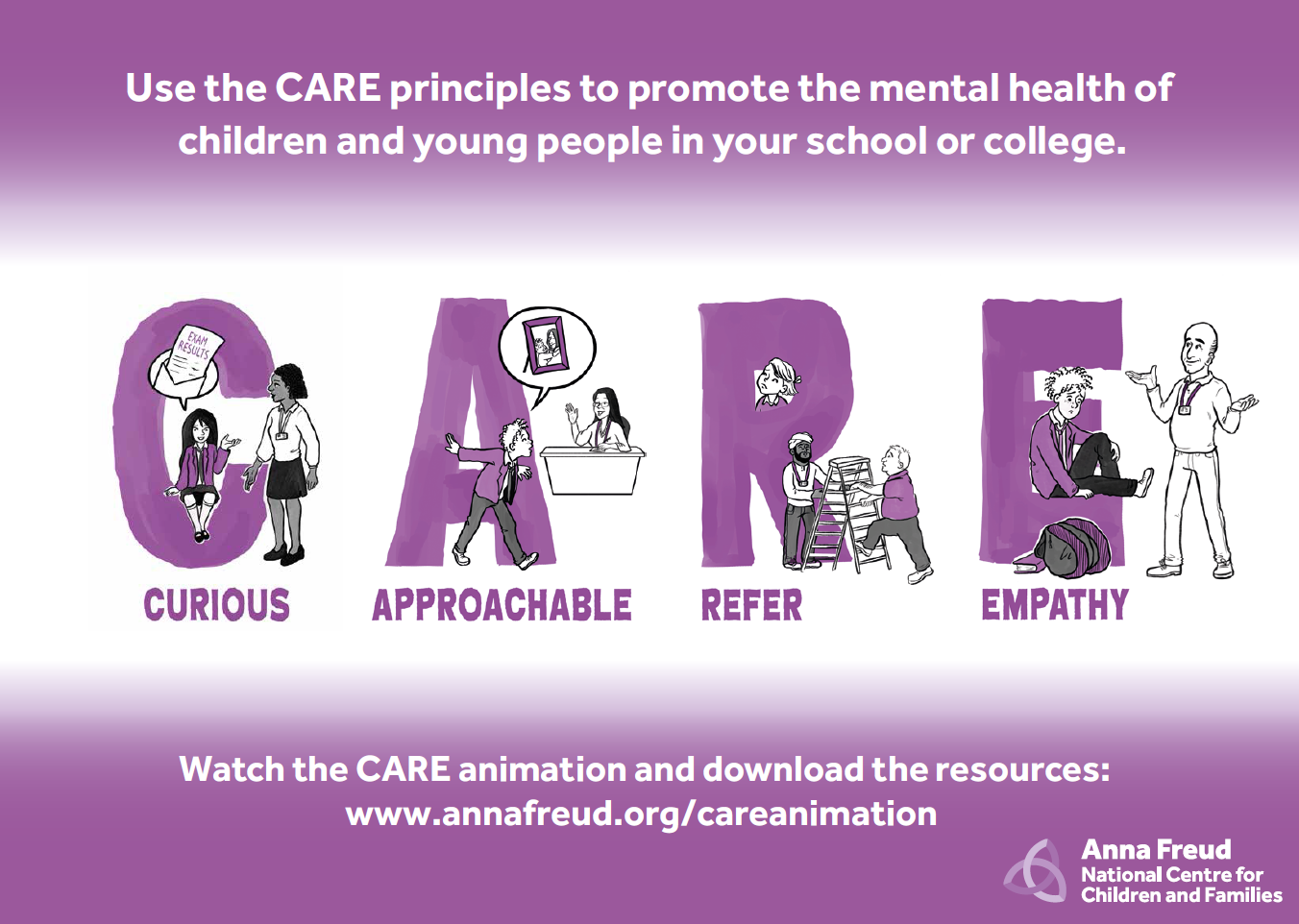
Care Principles
The CARE animation is aimed at all staff, including support staff and those who may not have direct contact with pupils. We recommend that schools and colleges use the animation in one of the following ways:
- On a staff training day.
- In a staff briefing or team meeting
- Send the animation and resources out in a staff bulletin
Click here for link
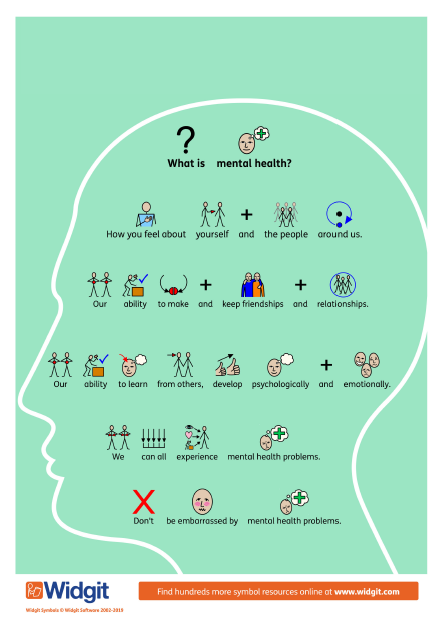
What is Mental Health - Poster
My Mum's got a Dodgy Brain from ForMed Films on Vimeo.
A film for children made by children who have a parent with a mental health problem, made in collaboration with Devon Partnership NHS trust.
When I Worry About Things: A primary mental health series from BBC Teach- aimed at 8-13s
This powerful animated series sees young people discuss their own experiences.
PLEASE NOTE: These clips cover themes which may upset some viewers. Teacher review is recommended prior to use in the classroom.
OCD and Depression:
Being A Bully:
Anorexia:
Being Bullied:
Panic Attacks:
Voices of children: "Are they shouting because of me?"
Much of the research into the impact on children of living in households with domestic abuse, parental substance misuse and mental health is from the perspective of adults – with limited insights from children themselves. We wanted to hear directly from children what it was like to live in these households. This article (July 2018) highlights the voices of children living in households with domestic abuse, parental substance misuse and mental health issues. Click here to view the full article
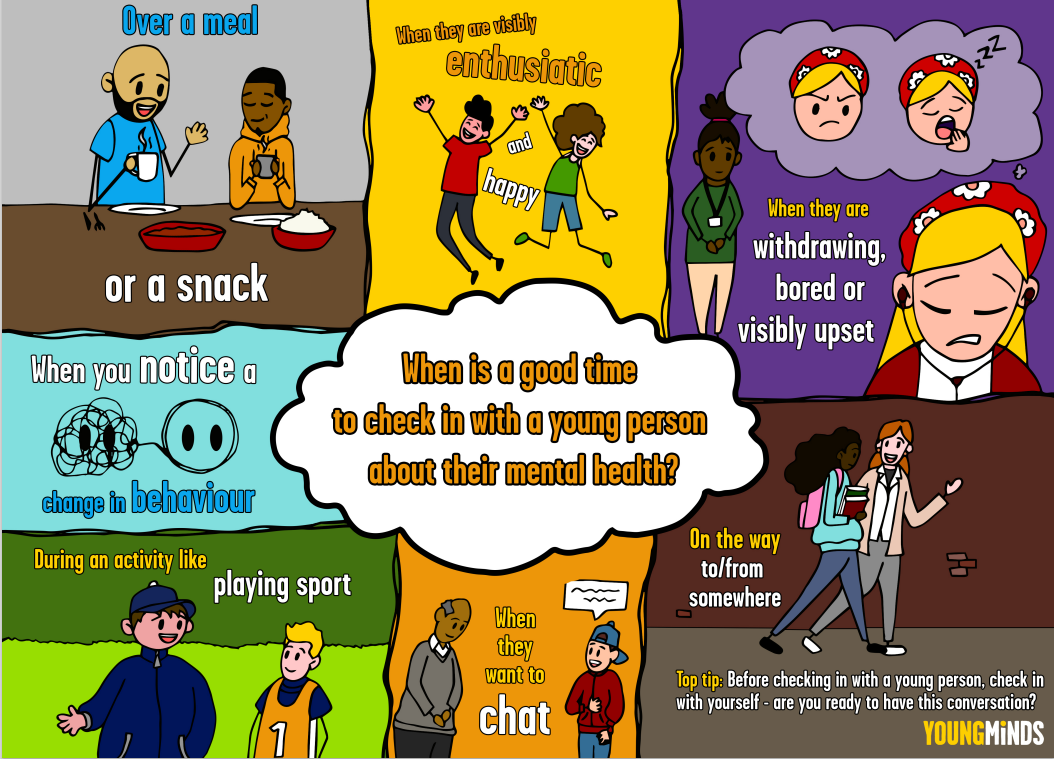
When to check in with a young person 
Useful poster from Young Minds on ideas when to check in with a young person including being mindful of how you are feeling and checking in with yourself first.
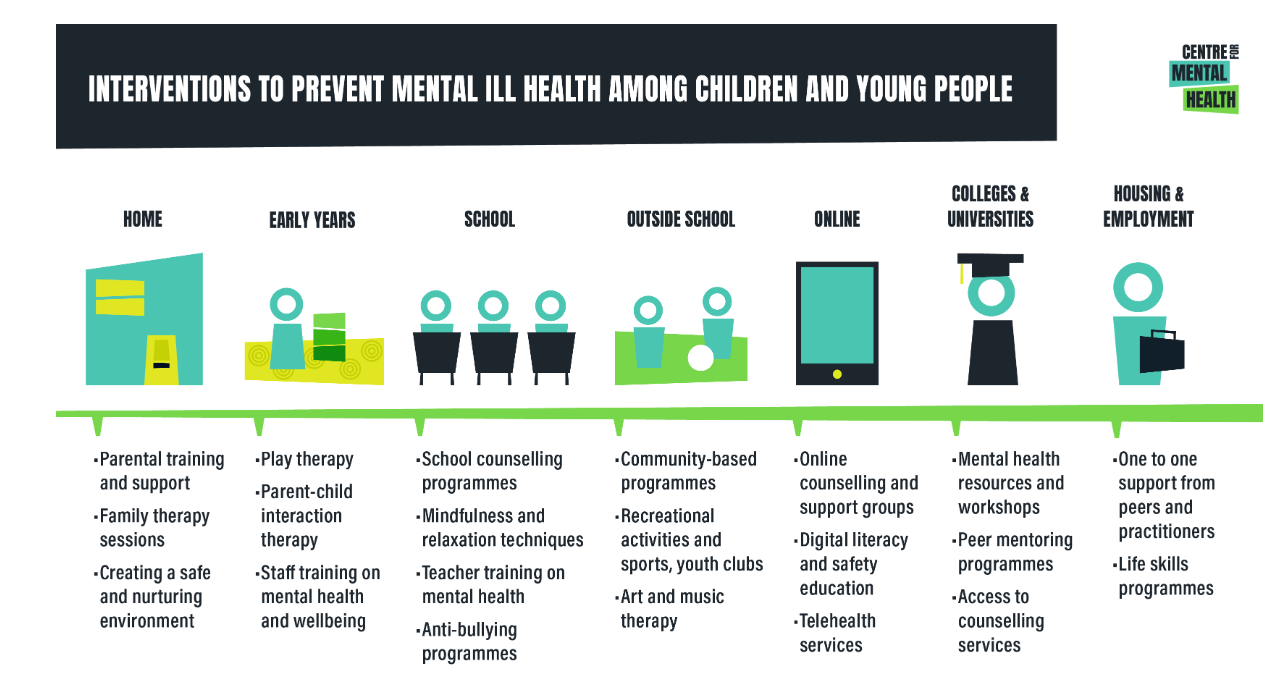
"Invest in Childhood" New report from the Centre for Mental Health
A interesting report from the Centre for Mental Health from their research into the factors that influence babies, children's and young peoples mental health and how the governement can help to creat the conditions for them to thrive.
To view the full report and recommendations please click here
Barnardo's Education Community
Summer Toolkit
Summer can be a difficult time for children. The purpose of this booklet is for children (ages 6 - 12) to learn skills and coping tools that can help them to self-regulate when there are challenges or difficult days.
There are a range of weekly activities and exercises, including a ‘try and score’ section for children to identify what works well for them and what can support them.
Emotional Wellbeing Pack
Emotional well-being is all about keeping your mind and body healthy. This booklet has been designed for parents and carers to read together with their children so they can help with some of the ways in which we look after our emotional well-being.
Summer Recharge
Some children and young people find the holiday period can be a challenging time and that it can cause:
- increased anxiety and worry
- isolation from friends and safe supports at school
- lack of routines and boundaries
- tension within the home or family environment
Summer “Power Up” and “Re-Charge” workbooks can help in these areas. The workbooks are a creative tool to support children and young people over the summer period.
Smartphones and their Impact on Children's Mental Health 
Useful video from ACAMH LEARN for Teachers and Parents and Carers on Smartphones and their Impact on Children's Mental Health.
Compassion in Education Toolkit 
This toolkit for teaching staff and education professionals in schools, colleges and universities by Samaritans Wales is a useful guide in how to improve interactions between staff and pupils or students. It explores Mental Health, Emotional Distress, Suicide, Adverse Childhood Experiences (ACES), School Exclusions and Emotional & Mental Health Education. It also gives practical ideas and tips in acting compassionately and what do when someone is in emotional distress or mental health crisis.
Click here to view the Toolkit
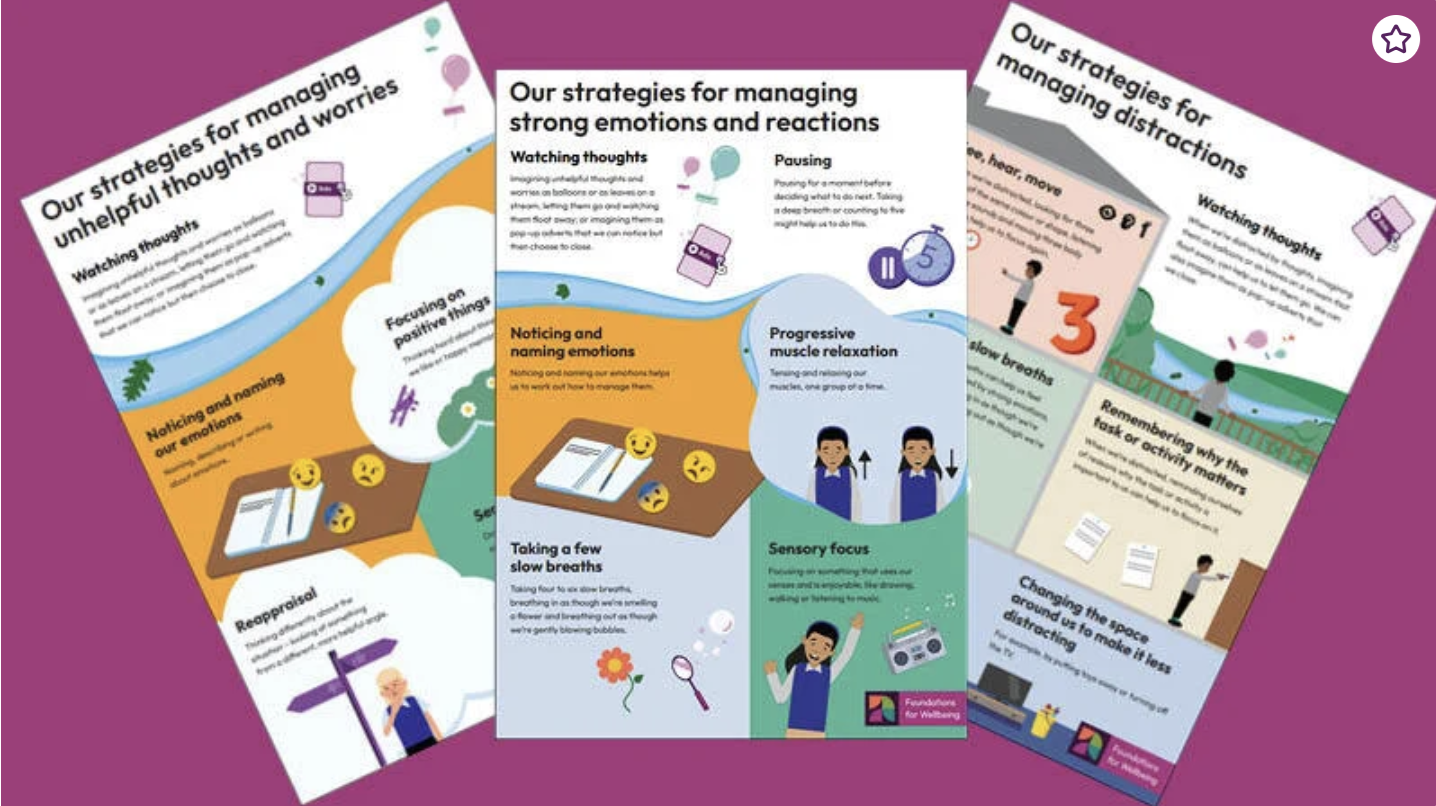
Free Emotion and Attention Regulation Strategies Posters 
The PSHE Association have produced these Free Classroom Posters on Emotions and Attention Regulation Strategies for Key stage 1 and 2.
Click image below to download the Posters
SPOT training is now CPD accredited!
Complete Units 1-3 of the e-Learning catalogue to receive your CPD certificate.
Units cover Recognising Signs, Raising Concerns an Understanding Treatment.
Learning outcomes:
- Understand major eating disorders and their daily impact.
- Recognise eating disorders as serious mental illnesses and the need for early intervention.
- Build confidence in identifying risk factors and early warning signs.
- Develop strategies for early detection and overcoming barriers.
Access the learning here
New e-Learning module: Supporting autistic pupils with eating disorders
- Learn to recognise the signs of an eating disorder in autistic pupils
- Gain knowledge of the challenges these pupils may face
- Understand how to support pupils within an education setting
Complete the module here
Support After Suicide Partnership
Talking to Students – Support After Suicide
Support After Suicide Partnership have put together some information and suggestions to help schools who have been affected by a death by suicide in their school community. We hope we can help you with
the unique issues and experiences of those bereaved by suicide, and guide you through such a difficult time. Remember that anyone affected – including you – may need some extra support
Whole School and College Approach (WSCA) Measurement Toolkit

The purpose of this toolkit is to allow educational settings to reflect regularly on the implementation of their WSCA work and track its impact on key outcomes. This can help inform their whole school and college approach
work in a targeted way and act as a springboard for discussions with stakeholders.
Educational settings will be able to self-assess their WSCA implementation and outcomes using our two tools: the Implementation Self-Assessment Tool (ISAT) and the Outcomes Self-Assessment Tool (OSAT).
Schools and colleges will also be able to track the self-assessment data over time and develop their WSCA work, making adjustments where needed, based on their progress.
Whole School and College Approach (WSCA) Measurement Toolkit - WSCA
Watch our videos on the development of the WSCA Toolkit, and the accompanying How-to guide below:


