

Online Safety - Key Stage 1&2

 Tik Tok Safety
Child safety on TikTok: parent factsheet - Guidance about concerns on Tik Tok for parents.
 Do you know what your children are doing online this summer?
- Chat regularly with your child about what they do online and get them to show you. Get to know about new technologies and trends. Talk about the potential negatives, like oversharing, seeing inappropriate content, cyberbullying, stranger danger, uncontrolled spending of money and spending too much time online. Set a good example yourself.
- Steer your child towards safe searching, websites and apps. Check what they’re watching and/or sharing on streaming sites like YouTube and TikTok. Encourage them to use child-friendly platforms like YouTube Kids.
- Gaming, social media, picture/video sharing and many other apps and websites have lower age limits for a reason, so you should make sure your child doesn’t access those for which they’re underage.
- Download apps only from recognised sources like App Store and Google Play. Add your own email address when setting up accounts and apps for your child.
- Discuss and agree boundaries and rules from a young age, including appropriate online usage, always being respectful and how much time they spend online. Empower them, but remember they don’t have the experience or maturity to always make the right decisions.
- Consider setting up parental control software and apps on computers, mobile devices and games consoles, privacy features on social networking sites, safety options on search engines and safe location settings on devices and apps. Turn on your ISP’s family filters.
- Stay familiar with new game and social media trends, especially those attracting negative publicity because they may be violent, encourage gambling or leave the way open for messaging random strangers, enabling hence potential grooming or other types of coercion.
- For video calls, ensure your child’s safety by updating to the platform’s latest version, following its safety advice and checking that call invitations and replies can’t be seen by anybody outside the agreed call group.
- Online gaming is widely recognised as having many developmental benefits for young people, but talk to them about potential negatives like chatting to strangers, in-game purchases (like loot boxes, skins and cheats), and overdoing screen time.
- Talk to your child about misinformation, disinformation and fake news. Tell them not to believe or share everything they see or read, especially in these days of sponsored ‘news’ and AI-generated images, videos and text.
- Warn your child about confidential information, personal details and images/video about themselves or others they share in posts, profiles, messages and chats. Consider what you share yourself.
- Without being controlling, keep an eye on your child’s online activities and know how to recognise the signs of something not being right. For example, criminals have exploited increased online use for recruiting children into illegal activities such as cybercrime and drug muling.
For more information, click here
Exciting new interactive online security resources for 7-11 year olds
 Award-winning interactive online security resources for 7-11 year olds.
Young people are growing up in an increasingly digital world, exposing them to both the opportunities and risks of the internet. CyberSprinters empowers them to make smart decisions about staying secure online.
The digital game can be played on phone, tablet and desktop, and is supported by a suite of activities to be led by educational practitioners working with 7-11 year olds. Parents and carers can also try the CyberSprinter puzzles with their children at home!
Online Safety Calender

To download please click on the image
Cyberbulling Guidance - Cyberbullying: Understand, Prevent and Respond - Childnet International have teamed up with a range of experts and young people to create these resources and guidance.
NSPCC - Pokémon Go: A parent's guide - Tips and advice for keeping children safe on Pokémon Go
The UK Council for Child Internet Safety (UKCCIS)

UKCCIS is a group of more than 200 organisations drawn from across government, industry, law, academia and charities that work in partnership to help keep children safe online. Download the guidance by clicking on the logo.
New resource from Thinkuknow - Play Like Share - a three episode animated series and accompanying resource pack aims to help 8-10 year olds learn how to stay safe from sexual abuse, exploitation and other risks they might encounter online such as sharing content.
The Adventures of Smartie The Penguin
- Pop ups and in app purchasing
- Inappropriate websites for older children
- Cyberbullying
Sextortion
Sextortion is a crime rapidly on the increase.
Also known as ‘webcam blackmail’, it refers to criminals deceiving webcam users into unclothing and performing sexual acts.
This footage is recorded and then used to blackmail victims for money.
It is an international, organised crime, making it difficult for the police to capture the criminals responsible.
Click here to view the PowerPoint
Click here to view the Lesson Plan template
KS1 Jessie and Friends - Online safety education for 4-7's .
Give your 4-7 year olds the knowledge, skills and confidence to stay safe online with Jessie & Friends, a three-episode animated series and resource pack. You’ll find lesson plans, storybooks and activities designed to be used across a range of settings. Jessie and Friends has been awarded the PSHE Association Quality Mark. Jessie & Friends follows the adventures of Jessie, Tia and Mo as they begin to navigate the online world. They learn that while the internet can be an exciting place where they can learn and have fun, sometimes they may encounter things online which make them feel worried, scared or sad.
The films are accompanied by a comprehensive resource pack for professionals, with session plans for each episode and guidance on safe and effective delivery. Also available are subtitled versions of the animations, storybooks, and posters for parents/carers and children.
.
Thinkuknow
Thinkuknowhave also produced two new presentations for parents and carers of primary and secondary aged children.
The primary presentation covers:
- Children online
- Live streaming
- Gaming
- What parents and carers can do
- Thinkuknow resources for primary
- Thinkuknow resources for parents and carers
- Reporting to NCA-CEOP
The secondary presentation covers:
- Young people online
- Sexual exploration online
- Sharing images
- Sexual abuse online
- What parents and carers can do
- Thinkuknow resources for secondary
- Thinkuknow resources for parents and carers
- Reporting to NCA-CEOP
 What is Social Media
Speak Out, Stay Safe

Childnet International
22/09/17 Childnet International - 'Trust Me' gains PSHE Accreditation Childnet's Trust Me Resource is now a PSHE accredited resource. It was created for teachers after the Childnet education team saw a need for a resource to start the conversations around extreme online content, as well as the need to develop young people's critical thinking skills.
31/10/17 Times Educational Supplement - 3 steps to keep pupils safe from harmful relationships online We are spending a lot of time being reactive in dealing with the aftermath of digital relationships going wrong. But what if we were to instead focus on preparing our young people for the digital world, and on empowering them to create and sustain positive relationships? Here are 3 steps to help achieve this:
- Develop awareness
- Nurture mental health and wellbeing
- Develop a moral compass and strong values
To read further please click on the title above.
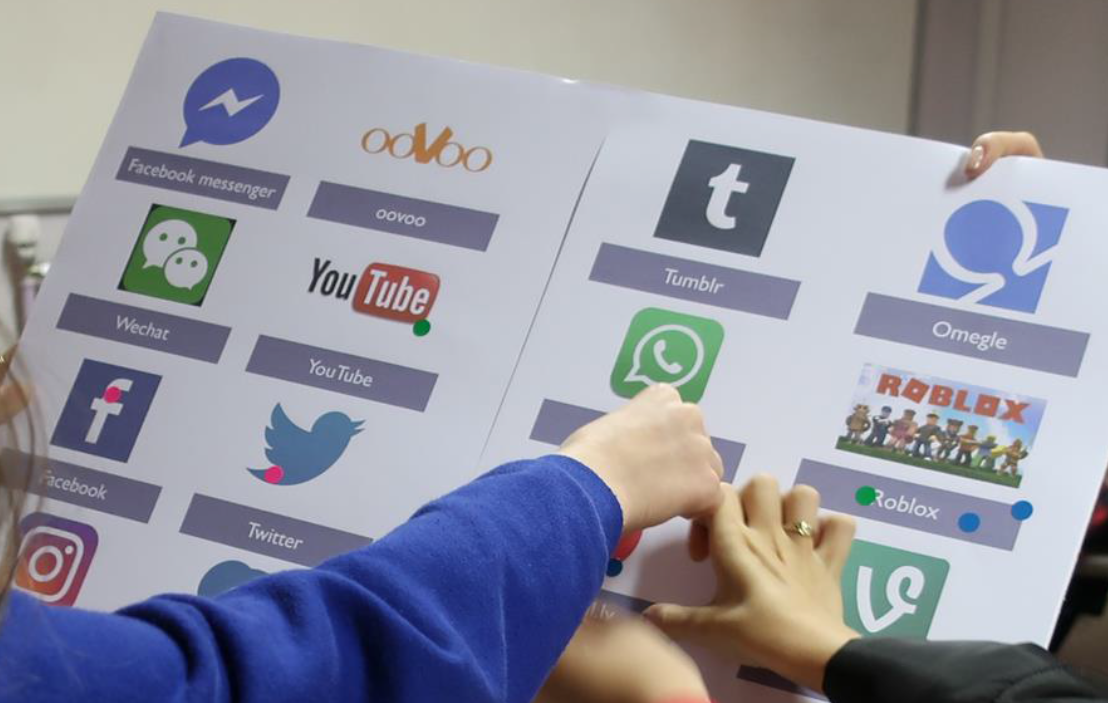
Life in 'Likes'
Life in 'Likes' children's commissioner report into social media use among 8-12 year olds.
Most social media platforms have a minimum age limit of 13, but research shows a growing number of children aged under 13 are using social media, with 3 in 4 children aged 10-12 having their own accounts.
While much is known about how teenagers use social media, this research provides the missing piece to the story, exploring the social media lives of children before they reach the teenage years. In October and November 2017, we conducted 8 focus groups with 32 children aged 8-12 to understand the impact of social media on the wellbeing of this age group. Click on the image to read the full report for Life in 'Likes' - Children's Commissioner 04/01/2018
Click here to view other publications from the Children's Commissioner

Google and Parent Zone’s Free Internet Safety Programme for UK Primary Schools
Google and the family internet safety experts at Parent Zone recently launched the Be Internet Legends programme for Key Stage 2 primary school students to help them be safe and confident explorers of the online world.
Last year, Google asked more than 200 teachers in the UK about their experience with online safety in the classroom. Most of the teachers they spoke to said they didn’t feel they had the necessary resources to teach online safety to pupils. And, 99% of them felt that online safety should be part of the curriculum.
https://parentzone.org.uk/legendshome
If you are a Key Stage 2 teacher and would like to order a FREE curriculum pack or express interest in one of the limited-availability Be Internet Legends assemblies, visit the legends hub or email legends@parentzone.org.uk for more information.
UK Safer Internet Centre 
UK Safer Internet Centre is a partnership of three leading charities, Childnet International, Internet Watch Foundation and SWGfL, with a mission to make the internet a better place for children and young people. It coordinates Safer Internet Day across the UK and provides support with online safety issues via a helpline to professionals working with children and young people. The centre has produced a range of education packs covering all year groups to help schools promote internet safety.
https://educateagainsthate.com/resources/uk-safer-internet-centre/
 Jessie and Friends - helping 4-7 year olds stay safe online
The website is based on the three-episode Jessie & Friends animated series, which aims to equip 4-7 year olds with the knowledge, skills and confidence they need to stay safer online. It is intended to be used by 4-7 year olds alongside their parents and carers, or within education settings as a learning tool.
The new interactive website encourages 4-7s to engage safely online by helping them to recognise worrying, upsetting or scary situations and reinforcing the key message that they should ‘Tell A Grown Up’ in these instances.
The guide aims to support parents and carers in navigating the website alongside their child. It provides information on the background and purpose of the website, in addition to information about each of the games and conversation starters to use with children. The guide is available for you to download and share with parent and carer networks within your setting.
"What is AI?" New resource from PSHE Association 
Developed in partnership with The Alan Turing Institute, What is AI? Introduces learning about artificial intelligence (AI), how it used in daily life, and some of the potential benefits and challenges of using this technology. For KS2-3, The Lesson pack and more information can be found here.
Advice for Parents Worried about issues raised by Netflix 's Show Adolescence 
Read the Mental Health Foundation's blog "Advice for parents worried about issues raised in Netflix's show Adolescence" The drama which has captured the country's attention, shines a light on the issues facing young people today, read the Mental Health Foundations thoughts and advice for parents.
In The Net: Interactive Play on Internet Safety 
In The Net, which lasts for approximately 50 minutes, aims to give young people knowledge of the dangers so that they are aware and can protect themselves, as well as letting them know where they can go for help and support with regards to Cyber Bullying. The play is free for schools that buy into GSCP's traded service or can be purchased seperately from Applied Theatre. The interactive play, for year 4 pupils, tackles some of the issues around safe internet use, cyber bullying and prevention of exploitation and pupils will be provided with a support pack at the end of the production. This is being supported by the Education Sub Group of the Gloucestershire Safeguarding Partnership (GSCP).
View Applied Theatre's website for more information on their productions
Online Financial Harms- Lesson Plans for Key Stage 2 - 5 and SEND 
The PSHE association's new, free, lessons plans and on-demand CPD course are aimed at protecting children suffering the cost of going online- from scams and fraud to exploitation and extortion.
Click here to find our more and access the Free lesson plans
Using AI in Education Settings 
See the support materials developed by the Chiltern Learning Trust (CLT) and Chartered College of Teaching (CCT), to support the safe and effective use of generative AI in education.
New Online Harms Parent Portal 
Following concerns raised by parents, Gloucestershire County Council has launched a new online resource giving parents and guardians information about the benefits and risks of online spaces, with details of further information and where support is available.
Click here to visit the Website
They have also created a number of posters which can be downloaded from the website to display in public areas.
Poster 1, Poster 2, Poster 3, Poster 4
Childline campaign warns of social media impact
A new Childline campaign is warning of the threat that social media and 24/7 online life poses to our mental health and wellbeing.

Honest conversations: Social media stars Joe Leggett (left) and Makai Fray come to terms with the impact of online life on their mental health as part of the NSPCC's new campaign video
With data showing children as young as 5 using social media and older children spending hours a day online, the NSPCC, which runs the Childline service, has launched a new campaign aimed at understanding how social media and time online can affect mental health.
It comes as new data reveals that more than half of Childline counselling sessions last year involved children suffering from mental health issues including suicidal feelings, self-harm and anger. The service is also hearing from young people who are spending large amounts of time online.
Between April 2025 and March 2025, Childline delivered 82,882 counselling sessions focused on mental or emotional health problems. This amounts to more than 230 a day and made up 52% of all counselling sessions. The service also saw a 6% rise in counselling sessions related to anger and children who struggle to control their temper.
The 82,882 sessions included 53,858 sessions focused on mental and emotional health, 18,981 that included suicidal thoughts and feelings, and 10,043 including issues of self-harm. Other themes included anxiety, stress and depression. There were also 2,895 sessions focused on issues realting to anger.
One girl, 15, told Childline: "I feel so anxious and overwhelmed. I want to talk about how I'm feeling but I don't know how. I even panic about having these feelings, it's so stupid. I worry about everything, school, not being good enough, what people think about me. I have to act as though everything is fine around everyone else; I bottle it all up then cry when I'm alone."
Another boy said: “I’m struggling with being chronically online. I doom scroll all the time then feel so sluggish and worthless because I’m not doing anything. I know it’s making my depression worse, and I should exercise or go outside at least but I just keep scrolling.”
The new campaign is called Race To A Milli and features TikTok stars Makai Fray and Joe Leggett competing head-to-head to be the first to reach one million "likes" for completing a series of challenges. However, the tasks are in fact a digital stress test, showing how they respond to things like peer pressure, hateful comments, and “rage bait”.
Afterwards, Makai and Joe discuss the ways social media has impacted their mental health. The aim is to get young people thinking about the impact of spending so much time online and on social media.
The campaign highlights the need for device-free time. According to Ofcom’s Online Nation 2025 report, children aged 8 and 9 are spending two hours a day online, rising to three hours a day for 13 and 14-year-olds. Snapchat and YouTube accounted for more than half (52%) of the total time spent online among 8 to 14-year-olds. Young adults aged 18 to 24, meanwhile, are the most active online, averaging 6 hours and 20 minutes daily.
Ofcom warns: “A significant amount of the time online spent by children is at night: across four of the main services used by children – YouTube, Snapchat, TikTok and WhatsApp – 15% to 24% of the time spent for the whole 8 to 14 age range is between 9pm and 5am.”
The report also reveals that 7 in 10 secondary-age children have seen harmful content online; the most likely being bullying and hate content.
And Ofcom’s Media Use and Attitudes report last year reported an increase in 3 to 5-year-olds using social media platforms. It found that among 3 to 5-year-olds, 19% now have their own mobile phone, rising to 82% of 10 to 12-year-olds.
Shaun Friel, director of Childline, said: "We know that mental health is one of the biggest issues facing young people today. It's something we hear about more than ever, and it can stem from a range of factors, some of which can come from the online world.
"We're hoping to spark honest conversations about digital resilience and the importance of taking breaks from the online world when it becomes too much.
“When you're spending hours online every day and being, exposed to comparison, vnegativity, and pressure to present a perfect version of yourself, it takes its toll. It's vital that children and young people understand that help is available. Whatever their worry, they can speak to one of our trained Childline counsellors by phone, or online chat. Childline is always here for them."
Advice from Childline
To support children who might be struggling with their mental health, especially when going online, the NSPCC recommends:
- Take regular breaks from your screen:Notice how scrolling makes you feel. If you're feeling anxious, comparing yourself to others, or stuck in a doom-scrolling cycle, it's time to step away. Even 10 to 15 minutes doing something offline can help reset your mood.
- Talk about how you're feeling:You don't have to bottle things up. Whether it's a friend, family member, teacher, or Childline counsellor, sharing what's on your mind can help you feel less alone and find ways to cope.
- Curate your online space:Unfollow accounts that make you feel bad about yourself and seek out content that's positive or helpful. Remember, social media often shows highlight reels, not reality. You're in control of what you see.
- Do something that makes you feel good:Whether it's going for a walk, listening to music, drawing, playing sport, or spending time with people you care about, make time for activities that lift your mood and help you recharge.
- Remember that asking for help is a strength, not a weakness:If you're struggling, reaching out shows courage. Childline is always available by phone (0800 1111), or online chat. You deserve support.
The NSPCC Childline service provides a safe, confidential place for children to turn to, whatever their worry, whenever they need help. Children can contact Childline 24 hours a day, 365 days a year.
- Childline is available to young people by phone on 0800 1111 and online via the 121 chat on the Childline website. Visit childline.org.uk/get-support/
- You can watch the NSPCC’s campaign video via youtube.com/watch?v=R_IAx65EpGE
Tagged under: online safety, sexual exploitation, hate crime, Key Stage 1, Key Stage 2, cyber bullying, bullying, trust me, Key Stage 3, calendar, minimum age, social media, YouTube, Twitter, Facebook, Messenger, AI, artificial intelligence, Incel, misogyny, Online financial harms, scam, fraud, exploitation, extortion, Online Harms,
Was the information on this page helpful?