

Stress

If your work is causing you to feel overwhelmed and stressed, it can be difficult to pinpoint the factors which make you feel this way.
What is stress?
It is important to distinguish between pressure and stress. Pressure is part of work and keeps us motivated and productive. But too much pressure, or pressure that lasts for a long time, can lead to stress.
Stress is not an illness but it can make you ill, so recognising the signs of stress and any contributory factors early will help to take steps to stop, lower and manage stress before it impacts your mental and physical state.
Identifying the causes of stress early can help prevent more serious health issues later on. It’s important that as individuals we all take responsibility for recognising what is causing us stress and how we can reduce it. Some levels of stress are healthy as it helps us to be able to become more resilient but continued stress and high levels can become more serious and potentially could lead to workplace burnout.
-
find out more about 10 stress busters – including getting started with exercise and setting aside time for yourself
-
use easy time-management techniques to help you take control
-
plan ahead for stressful days or events – planning long journeys or making a list of things to remember can really help
-
consider peer support, where people use their experiences to help each other. Find out more about peer support on the Mind website
-
listen to free mental wellbeing audio guides

Further support
- If you feel that stress, either from work or in life, is making you ill it is strongly recommended that you seek advice. Stress can cause many different symptoms. It might affect how you feel physically, mentally and also how you behave.
- You might notice a change in your physical symptoms such as headaches, tension in your jaw, gastrointestinal symptoms to name but a few. When we become stressed it can then become harder to concentrate and to prioritise our workload and you may notice changes in your behaviours, maybe snapping at people or becoming quieter or withdrawing from meetings.
- If that is the case there are places you can go to for support, such as your own GP, Occupational Health, the Employee Assistance Programme, Human Resources, and other organisations that you can contact both locally and nationally. Refective Supervision is available for staff through Occupational Health. Please email ohu@gloucestershire.gov.uk for more details.
April is Stress Awareness Month 
The Mental Health Foundation have a helpful guide on "How to manage and reduce stress" full of information about the mental health impact of stress, coping strategies and worksheets to help identify what is causing you stress and how to work through them.
Or there is "How to look after your mental health using mindfulness" which you can download for free.
The Oxford Mindfulness Centre has free audio mindfulness sessions as well as links to books and other resources. 
Action for Happiness' Building Resilience Ideas 
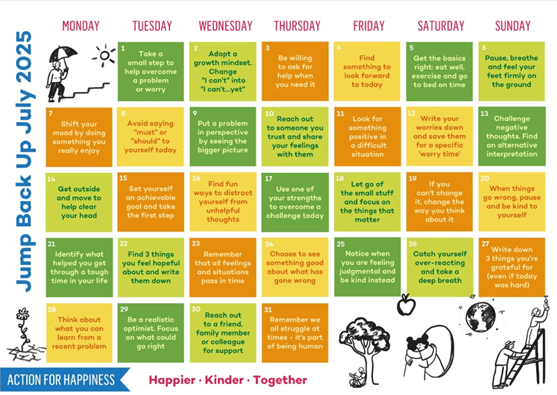
Check out Action for Happiness' "Jump Back Up July" Calendar with actions that can help build resilience and cope with life's ups and downs, one day at a time.
Or try out their quick video and activity to help build your resilience so you can cope better in difficult times
Stress Awareness Month
April is recognized as National Stress Awareness Month, a time to raise awareness about stress, its effects, and strategies for managing it effectively.
Stress Awareness Month Resources - The Stress Management Society
All resources are free to download and designed to help turn awareness into meaningful action throughout April.
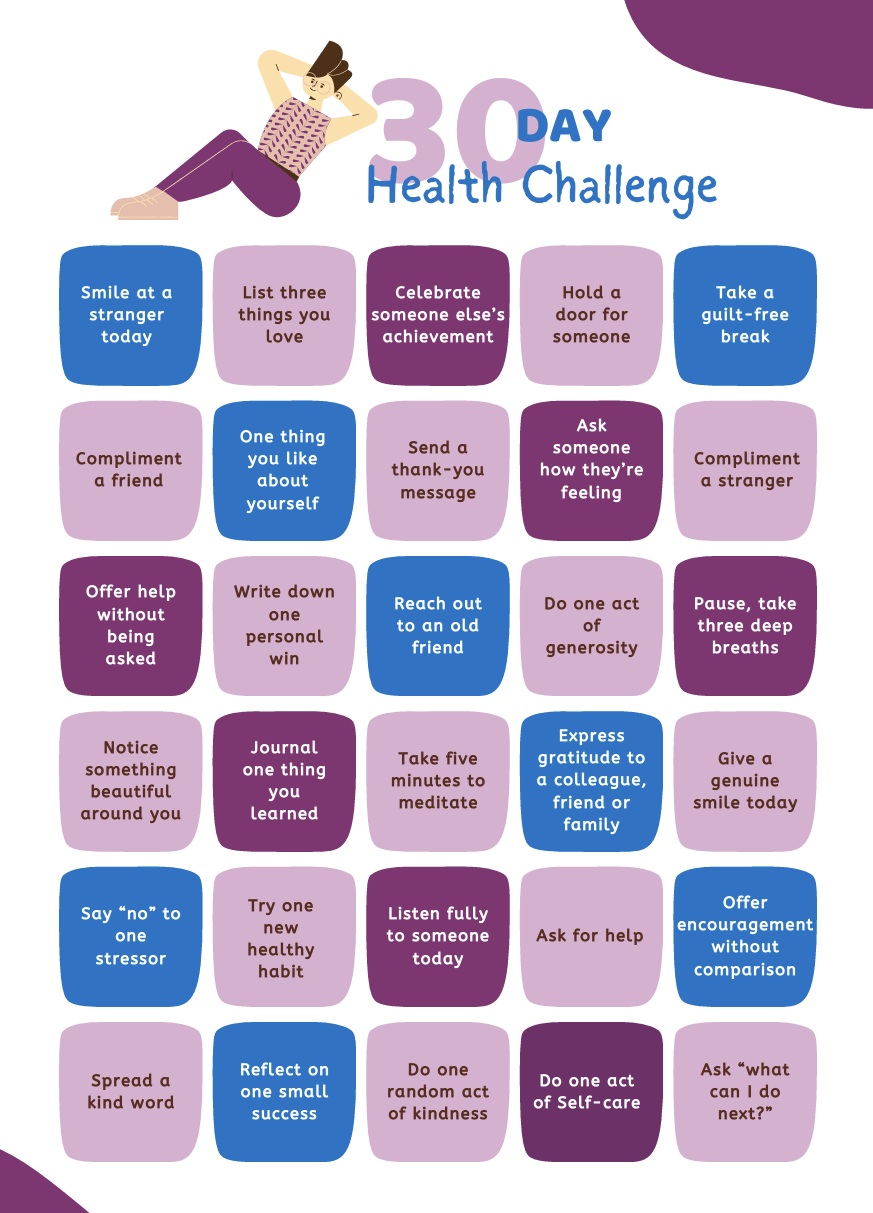
This guide walks you through small, practical ways to notice stress, check in with your partner, and take gentle actions together. Each section offers tips to pause, listen, and support each other so that stress becomes more manageable and connection grows.
Start with one small act of care and see the difference it can make.
Overview
Stress Awareness Month has been observed every April since 1992 to highlight the impact of stress on mental, emotional, and physical health and to promote coping strategies and resilience. The initiative encourages individuals, workplaces, and communities to recognize stress, reduce stigma around mental health, and adopt practical measures to manage stress effectively.
2026 Theme
The 2026 theme for Stress Awareness Month is #BeTheChange, emphasizing personal agency, intentional action, and building resilience through small, consistent habits. This theme encourages individuals to take ownership of their stress, strengthen connections with others, and implement practical strategies to improve mental health.
Practical Ways to Manage Stress
- Daily Movement: Incorporate light exercise such as walking, stretching, or yoga to reduce stress hormones and boost mood.
- Mindful Breathing: Practice deep breathing or meditation to calm the nervous system and improve focus.
- Set Boundaries: Learn to say no and protect time for rest and personal priorities.
- Social Connections: Engage with friends, family, or support groups to share experiences and gain perspective.
- Limit Information Overload: Take breaks from screens and news to reduce mental strain.
- Seek Professional Support: Therapists, counselors, and healthcare providers can offer tailored strategies for stress management.
Stress Awareness Month starts :: Keeping Well
Key Takeaway
Stress Awareness Month is not about eliminating stress entirely but about understanding it, managing it effectively, and building habits that support long-term well-being.
By participating, individuals can improve resilience, mental health, and overall quality of life while fostering supportive communities.
Tagged under: stress, mental health, resilience


