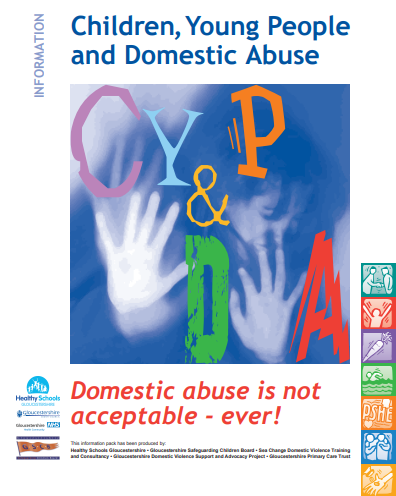
Children, Young People and Domestic Abuse- A resource pack aims to raise awareness of what domestic abuse is and the impact it has on the lives of people who are subjected to or witness it. There are many references to other avenues of support and the links with safeguarding responsibilities are highlighted.
Get Everyone Talking PANTS! - NSPCC resources to support teaching younger children about how to keep themselves safe.
My Body, My Rules: Information on FGM- Primary resources from the sexual health company, FPA. The webpage provides free downloads, and the option to purchase hard copies.
Guidance and Articles
Child Sexual Exploitation - Advice for Healthcare Staff from NHS England. Includes signs and possible indicators of CSE, as well as what to do if you suspect a child or young person is at risk of CSE.
'Time to Listen'- A joined up response to child sexual exploitation and missing children.
Helplines
Help for adults concerned about a child - NSPCC helpline: 0808 800 5000
Help for children and young people - Childline: 0800 1111
Useful Websites
Gloucestershire Domestic Abuse Support Service
GDASScan intervene at the earliest opportunity to prevent a situation of domestic abuse from escalating. They provide 'places of safety' in a crisis where necessary, and support families back into communities as soon as possible following a crisis. GDASS links families to other local services, contributes to safeguarding children by supporting stability in families, and offers specialist advice to other professionals.
GDASS helpline: 0845 602 9035.
NSPCC Learning
NSPCC Learning provides all the tools, training and resources you need to keep children safe. Quick links:
Harmful Sexual Behaviour Framework - The harmful sexual behaviour framework aims to help local areas develop and improve multi-agency responses to children displaying harmful sexual behaviours.
Preventing Sexual Violence in Schools- A CASPAR briefing summarising the key points from the new Department for Education (DfE) guidance on sexual violence and sexual harassment between children in schools and colleges.
Making Sense of Relationships – PSHE resources Developed with the PSHE Association. The 'Making Sense of Relationships' resources will help you plan lessons around personal safety and healthy relationships.
Schoolbeat
The Gloucestershire Police Schoolbeat team work to build trusting relationships with students from Year 6 through to Year 9. Information about their projects and services can be found on the GHLL website here.
THINKUKNOW
THINKUKNOW works to protect children from online abuse. The website provides:
Information and advice for adults about online safety for children
Indicators which may point to child abuse or sexual exploitation
Online safety videos for all age ranges
Education resources for professionals
Information and advice about current online trends
Band Runneris an animated game for 8-10 year olds by THINKUKNOW. It helps young people to build their knowledge, confidence and skills around online safety.
The website also provides a ‘Worried About Something?’ page which children can visit for advice and support if something worrying has happened online.
Parents and carers can access information about the Band Runner game and website here.
Tell Someone Safe: a video resource to help you prepare children for lessons on abuse and harm prevention
This video has been developed for teachers and children in primary school to view before lessons on abuse and harm prevention to help prepare them. Developed by researchers from 5 universities following pioneering research on abuse and harm prevention for primary schools. Their research in primary schools across the UK found that children, schools and teachers would benefit from being well prepared for such lessons, whether they are delivered by external organisations or by teachers themselves, before they are delivered to children in classrooms.
The video, which has been designed with the help of primary school children and professional animators, uses the views and voices of children who participated in our research to prepare all primary school children for teaching aimed at preventing abuse and harm, as set out in the Relationships Education curriculum.
This short 3-minute video is intended to be shown to primary school children of all ages before they take part in lessons on abuse and harm prevention - sometimes referred to as Healthy Relationships lessons. We suggest that the video is shown at least one week before these lessons to give children time to think it over and talk about it with their teacher, friends and family.
County Lines for Primary Schools
Understanding County Lines: A Resource for Young People (KS2)
Awareness Raising for Year 6 pupils – helping schools meet their safeguarding duties
As part of the Safeguarding in Education Traded Service offer, Gloucestershire Safeguarding in Education Partnership is pleased to share that we have partnered with Narrative Alchemy and 2Pears Films to bring you a brand-new streamed film resource:'CountyLines' provides a compelling film and a complete pack of seven 30-minute step-by-step lessons, empowering staff to lead confident, impactful discussions around this complex and sensitive issue.
Even in rural or seemingly ‘safe’ areas, County Lines exploitation can reach young people as they prepare to move up to secondary school. Recent reports from The Children’s Society and The Guardian highlight that primary-age children - some as young as seven - are already being targeted by gangs. This makes Key Stage 2 a crucial moment for prevention and awareness.
Understanding CountyLines is a professionally produced streamed film resource created specifically for Year 6 pupils. It helps children understand how grooming and criminal exploitation work - and, most importantly, who they can turn to for help and advice.
If you are a traded service school and have not received your link to access the resources, please contact gsep@gloucestershire.gov.uk
Narrative Alchemy Limited
Narrative Alchemy is a UK-based organisation dedicated to using film, storytelling, and education to tackle complex social issues affecting young people.
Through impactful films, applied theatre, workshops, and digital learning resources, they create engaging, research-backed content that helps schools, educators, and communities address critical topics such as County Lines, Child Sexual Exploitation, Domestic Abuse & Coercive Control, and Knife Crime.
Beyond working with schools, colleges, and universities, they collaborate with the NHS, MoD, police forces, and social services, providing effective intervention tools to safeguard young people. Their work extends across the UK and internationally, partnering with educators, safeguarding professionals, and policymakers to develop solutions that spark conversations, build resilience, and drive real change -ensuring young people are equipped with the knowledge and confidence to make safe, informed choices.
2 Pears Films is a creative partnership specialising in creating engaging and cinematic short films that resonate with young audiences. Their work focuses on addressing the challenges and complex issues that young people often encounter, from mental health struggles to navigating relationships and self-identity. With a fresh, creative approach and a deep understanding of youth culture, 2 Pears Films crafts visually stunning and emotionally compelling stories that not only entertain, but also inspire meaningful conversations and positive change.
This County Lines resource has been carefully designed to help primary teachers explore an increasingly important safeguarding issue in an age-appropriate way. It is based on our award-winning CountyLines play, seen by thousands of young people across the UK, and specially adapted for KS2 pupils. The programme was developed in consultation with primary headteachers, social services, and PSHE and Safeguarding Leads to ensure it is safe, accessible, and effective.The resource contains seven structured lessons, each lasting around 30 minutes. The first lesson introduces the topic through a series of short tasks and a 10-minute film that sets the scene.
The following six lessons explore the grooming process used by County Lines gangs, one stage at a time:
Identification
Engagement
Building Trust
Building Dependency
Entrapment
Checkmate
Each lesson includes a range of discussion, creative, and reflection tasks, all clearly timed and easy to follow. Teachers can follow our lesson plans in sequence, or use the film and individual clips flexibly to support existing PSHE, safeguarding, or transition work. Every activity is designed to build understanding of how grooming and manipulation work, helping pupils recognise risk, trust their instincts, and know where to turn for help.
This ensures pupils always experience the full intended sequence.
We strongly recommend that teachers familiarise themselves with the full resource before delivering it. This ensures confidence with the material and allows time to plan how best to support pupils who may be affected by the themes. Before starting, please also make sure you are aware of your school’s safeguarding procedures and referral mechanisms, should any disclosures arise.
Above all, this resource is intended to create a safe, open space where pupils can talk, think critically, and learn how to keep themselves and each other safe. The lessons are designed to support schools in meeting their PSHE and Keeping Children Safe in Education (KCSIE) duties, while fostering empathy, resilience, and awareness through the power of story.
What is County Lines?
County Lines is when criminal gangs use children and vulnerable adults to move and sell drugs from cities into towns, villages, and coastal areas. They use mobile phones to take orders.
Children are often tricked, groomed, or forced into doing this. Gangs may offer them gifts, money, food, or friendship to win their trust at first. Later, threats, violence, and blackmail are often used to keep them involved.
According to The Children’s Society and the National Crime Agency, County Lines is a growing form of criminal exploitation that affects thousands of children across the UK each year.
Why does it matter in Primary Schools?
County Lines mainly affects teenagers, but gangs may target younger children too -especially if they are struggling at home, are unhappy, or are left alone a lot.
Children aged 7-11 may be watched or tested by gangs to see if they are easy to influence. Some may already be carrying messages or hiding items without fully understanding what they’re doing.
Children with older siblings involved are at even greater risk. Gangs often deliberately target younger brothers or sisters, especially if they’ve already exploited someone in the family. This is sometimes called intergenerational exploitation.
The Children’s Society highlights growing concern about gangs targeting children from the same families and increasingly younger age groups.Primary school staff are often the first to spot changes in behaviour. Early action can make a big difference.
What the Law Says
Children involved in County Lines are victims, not criminals. The Modern Slavery Act (2015) says children forced into criminal activity like this are being trafficked.
Schools must protect children under the Children Act (1989 and 2004).Staff must report any concerns to the Designated Safeguarding Lead (DSL).A new law passed in 2025 makes it even clearer that child criminal exploitation is a crime, and that those who exploit children can go to prison.
Are Gangs Targeting Younger Children?
Yes. Gangs are targeting children younger than ever before. Children as young as 7-10 have been groomed and used to move drugs and money. Younger children are seen as less suspicious and easier to manipulate. Gangs use social media, gaming platforms, and older peers to make first contact. The Children’s Society and NSPCC have both reported that younger children are being recruited more frequently, with some schools seeing signs of grooming in Key Stage 2 pupils. This makes awareness and early intervention in primary schools vital.
Signs to Look Out For
You might notice:
A child with money, new clothes, or a phone they can’t explain
Changes in behaviour -becoming angry, secretive, or withdrawn
Talking about older friends or adults they’ve met outside school
Not coming to school, or being picked up by unfamiliar people Saying they’re going to the coast, another town, or ‘doing favours ’None of these signs prove a child is being exploited-but if something feels off, trust your instincts and report it.
What to Do if You're Worried
Tell your Designated Safeguarding Lead (DSL) straight away
Write down what you’ve seen or heard, using the child’s own words if possible
Do not investigate or ask leading questions -your role is to raise the concern, not to prove anything
Keep the child safe and supported. Reassure them they’ve done nothing wrong
What England’s 2025 National Youth Strategy Means for Risk, Protection and Transition
This article, written by Isabella King, explores how safeguarding is relied upon within the National Youth Strategy and where greater clarity may be needed to ensure that prevention does not drift into risk containment.
Gloucestershire Safeguarding Children Partnership (GSCP)
As part of the Gloucestershire Safeguarding Children Partnership (GSCP) ongoing campaign to raise awareness as to the scale, nature and how to respond to Child Sexual Abuse, they have set out five key messages.
This promotion has been scheduled to coincide with the National ‘Sexual Abuse and Sexual Violence’ week: Monday 2nd – Friday 6th February 2026.
Following recent feedback regarding the GCC Professional Advice Line, the decision has been made to extend the Advice Line hours from 8:30am–3:30pm to 8:30am–4:30pm. This change will take place from Monday 23rd February 2026.
You can reach the advice line on 01452 427070
Centre of expertise on child sexual abuse
Research indicates that just one in three children who had been sexually abused by an adult told anyone. For those abused by another child this was even less, with five out of six not speaking to anyone.
There are many barriers to children sharing their experiences of sexual abuse and it simply isn’t likely that a child will feel able to tell professionals directly what is happening or recognise that what is happening to them is abuse. Instead children may show other emotional, behavioural and physical signs.
All professionals need the knowledge, skills and confidence to recognise when children might be showing them that something is wrong and understand the potential indicators of sexually abusive behaviour in those who may be abusing them. There are also factors within the family or environment which can increase opportunities for abuse to occur, so a professional understanding of these is also really important in order to reduce risks and build strengths.
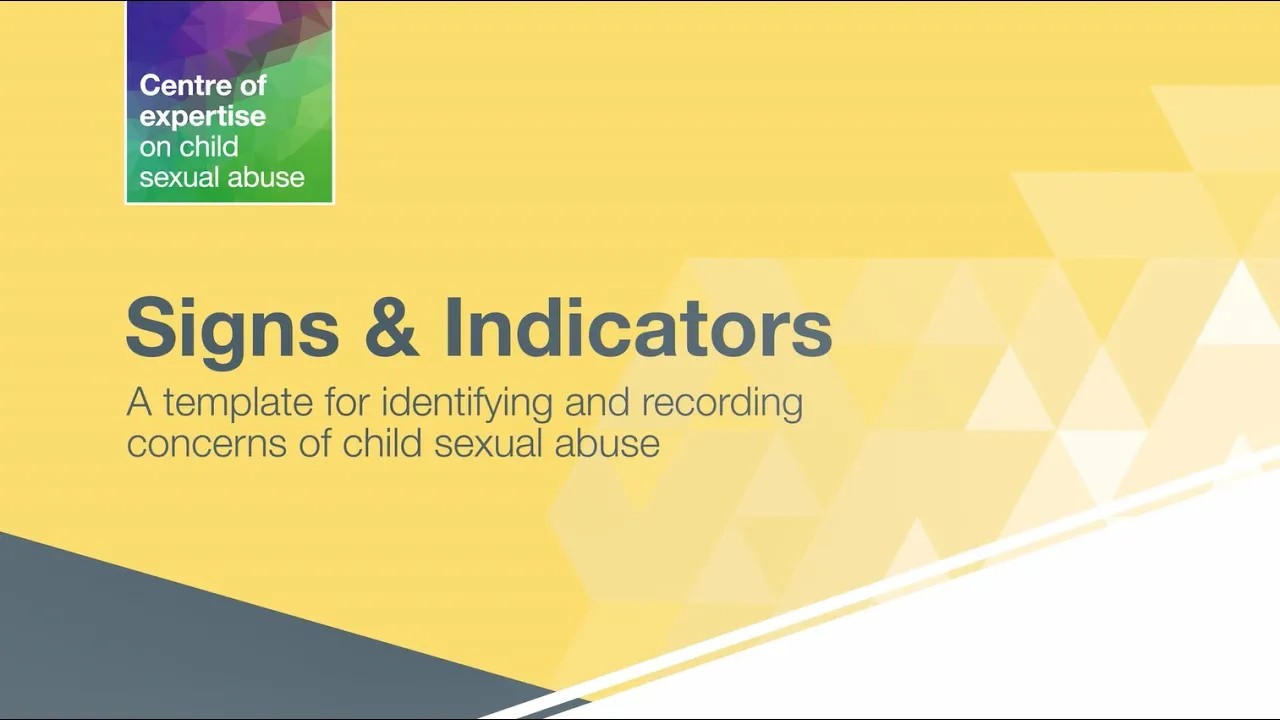
The Signs and Indicators template is designed to provide a common language amongst professionals to discuss, record and share concerns that a child is being, or has been, sexually abused.







 Help for adults concerned about a child - NSPCC helpline: 0808 800 5000
  Help for children and young people - Childline: 0800 1111
 GDASS can intervene at the earliest opportunity to prevent a situation of domestic abuse from escalating. They provide 'places of safety' in a crisis where necessary, and support families back into communities as soon as possible following a crisis. GDASS links families to other local services, contributes to safeguarding children by supporting stability in families, and offers specialist advice to other professionals.
 NSPCC Learning provides all the tools, training and resources you need to keep children safe. Quick links:
  The Gloucestershire Police Schoolbeat team work to build trusting relationships with students from Year 6 through to Year 9. Information about their projects and services can be found on the GHLL website here.
  THINKUKNOW works to protect children from online abuse. The website provides: